Twenty-five years have passed since September 11, 2001 — a day that changed countless lives and left an enduring mark on our nation. Today, we remember the people who were lost, the families whose lives changed forever, and the first responders, service members, volunteers, and ordinary citizens who stepped forward when they were needed most.
As members of the boating and maritime community, we also remember a remarkable part of that day’s history: the mariners who turned New York Harbor into a route to safety when Lower Manhattan needed one most.
When Manhattan Turned to the Water
In the hours following the attacks on the World Trade Center, Lower Manhattan was transformed. Roads, tunnels, rail service, and much of the normal transportation network were disrupted or closed, leaving hundreds of thousands of people searching for a way out. Many moved toward the shoreline, where ferries, tugboats, fireboats, commercial vessels, and private craft were already beginning to help.
At 10:45 a.m., the U.S. Coast Guard issued a radio call asking available vessels to assist. Lt. Michael Day, helping coordinate the response from New York Harbor, made the appeal over marine radio:
All available boats. This is the United States Coast Guard… Anyone wanting to help with the evacuation of Lower Manhattan report to Governors Island.
By the time that official call went out, parts of the maritime community had already been moving people away from Manhattan for nearly two hours. The Coast Guard did not replace that improvised effort; it helped bring coordination to a rescue that was already unfolding across the harbor.
A Harbor Responds
The response grew into a spontaneous flotilla involving at least 150 vessels and hundreds of mariners. Captains and crews who had begun the morning expecting an ordinary workday instead found themselves loading frightened, exhausted, and dust-covered strangers, carrying them across the harbor, and returning for more.
The National September 11 Memorial & Museum estimates that 300,000 to 500,000 people were transported to safety by water in less than nine hours. The scale is difficult to absorb. For perspective, Operation Dynamo at Dunkirk evacuated 338,226 Allied troops between May 26 and June 4, 1940. The circumstances were very different, but the comparison helps convey the extraordinary size of the New York Harbor evacuation.
The John J. Harvey and the Work After the Evacuation
One vessel that came to symbolize the response was the John J. Harvey, a retired 1931 New York City fireboat that had been preserved as a living piece of maritime history. On September 11, its volunteer crew helped evacuate civilians from Lower Manhattan. Then, when water mains downtown were damaged, the Harvey joined two FDNY fireboats in pumping water from the Hudson River to firefighters on shore.
That work continued for roughly 80 hours while the water system was being restored. A vessel that had already been retired was suddenly performing the work it had been built to do decades earlier — not as a museum piece, but as an active part of the emergency response.
Thousands of Trips, Thousands of Individual Decisions
The boatlift was not the work of a single agency or company. It depended on ferry operators, tug crews, sightseeing boats, harbor pilots, Coast Guard personnel, fireboats, private captains, and many others making practical decisions in rapidly changing conditions.
NY Waterway says its crews alone evacuated more than 150,000 people from Manhattan that day. Other vessels made repeated crossings to New Jersey, Brooklyn, Staten Island, and points around the harbor, while many returned toward Lower Manhattan carrying emergency personnel and supplies.
Behind every large number were individual acts: a deckhand reaching down to help someone aboard, a captain making room for one more passenger, a crew turning back toward smoke because people were still waiting at the water’s edge. The remarkable part of the boatlift was not simply its size. It was the willingness of so many people to use the vessels, skills, and knowledge they had to help strangers.
The Responsibility of Being on the Water
For many people, boating represents freedom — leaving the dock, watching the shoreline recede, and experiencing a part of the world that can only truly be appreciated from the water. But anyone who spends enough time at sea also understands that the water carries responsibility with it.
Mariners look out for one another. When another vessel is in distress, when conditions change unexpectedly, or when someone needs assistance, the traditions of seamanship call for preparation, awareness, sound judgment, and a willingness to help. The response on September 11 demonstrated those values on an extraordinary scale.
Hundreds of mariners used what they had — their vessels, their experience, their crews, and their knowledge of New York Harbor — to serve people they had never met. It remains a powerful reminder that seamanship is about more than operating a boat. At its best, it is also about service.
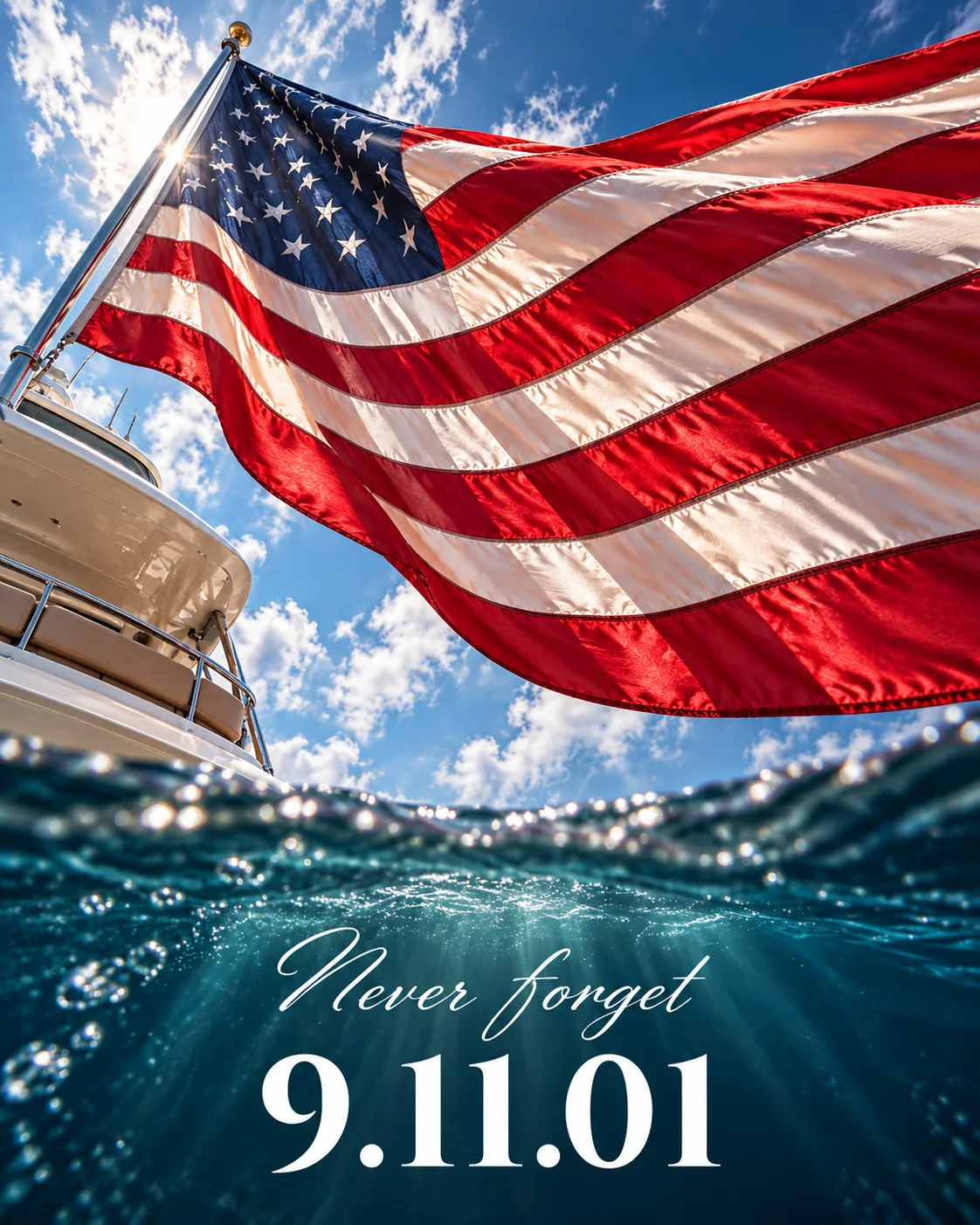
Remembering 25 Years Later
A quarter century has now passed since September 11, 2001. For those who lived through that day, many memories remain vivid. For younger generations, September 11 is increasingly understood through photographs, recordings, museums, classrooms, and the stories passed down by those who remember. That makes careful remembrance all the more important.
The story of September 11 contains unimaginable loss. It also contains countless examples of courage, compassion, duty, and people helping one another in circumstances none of them could have expected. The waterborne evacuation of Lower Manhattan is one of those stories — a reminder of what can happen when a community recognizes that help is needed and responds.
Today, we remember those whose lives were taken on September 11, 2001. We honor the firefighters, police officers, emergency personnel, service members, volunteers, civilians, and families forever affected by that day. And from our place within the maritime community, we remember the captains, deckhands, ferry crews, tugboat operators, Coast Guard personnel, fireboat crews, harbor pilots, and private mariners who answered the call from New York Harbor.
Twenty-five years later, we remember.